

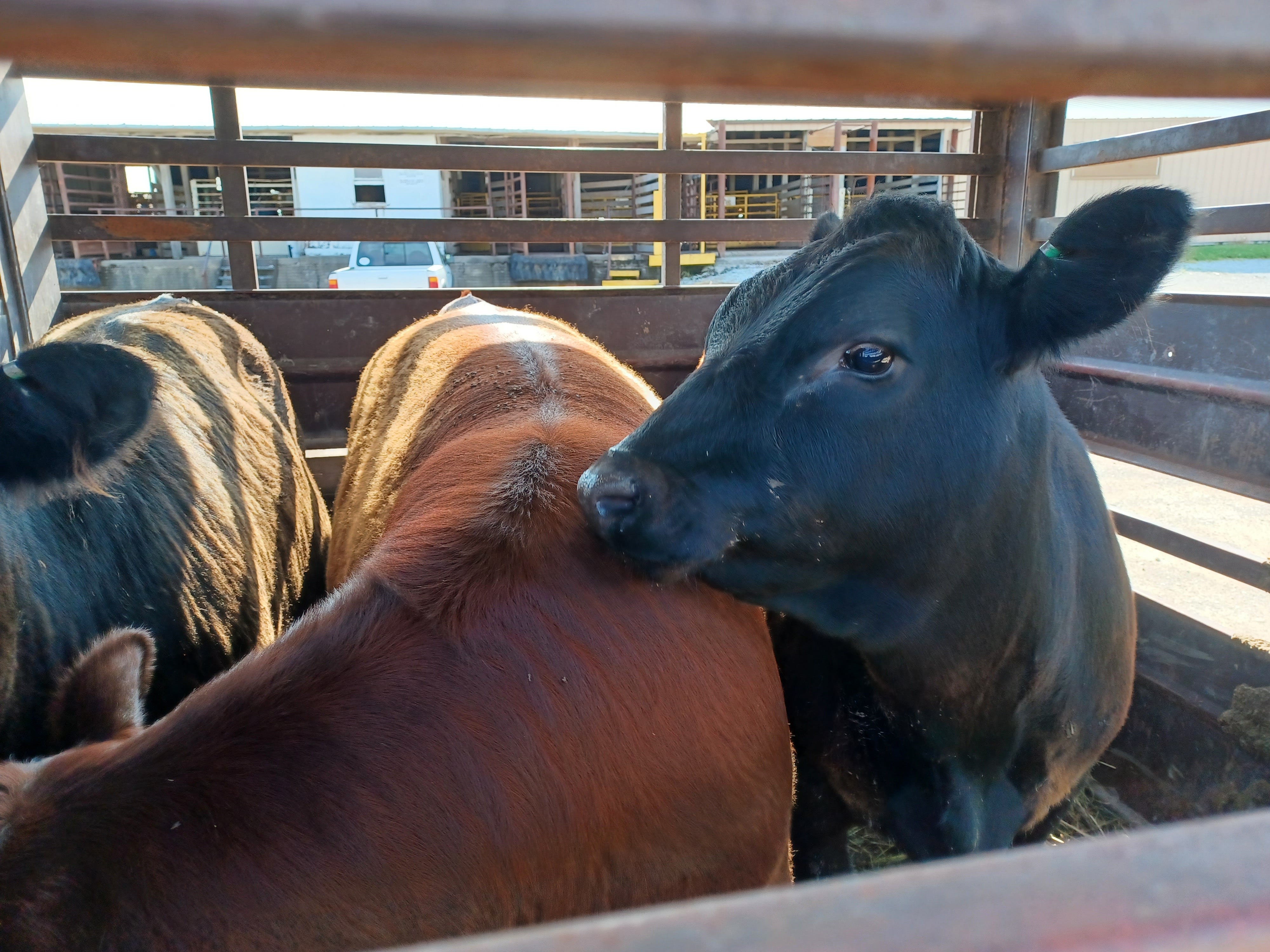
Delivering our feeder calves to the local livestock auction in Knoxville, Iowa.
Update: November 15, 2025. I wrote this column on Saturday, November 8. When I published it Sunday morning, my opening paragraph suggesting a deal wasn’t imminent could not have been farther off the mark. I believe Democrats can and must keep fighting against President Trump’s strategy of chaos and pain. I stand by the rest of the column.
We’re 39 days into the longest federal government shutdown in history. A deal does not seem to be imminent. With big losses across the country this week for Republicans on election night, Democrats appear to be holding their resolve to keep fighting for the Affordable Care Act enhanced premium tax credits.
Republicans aren’t having much success in making the shutdown and pain associated with it stick to Democrats. The pain is becoming widespread from a historic hunger crisis to canceled flights. Many national parks have been closed and important government reports are going unreleased. Almost a billion dollars a day in federal contracts aren’t being paid. And most importantly, to well over a million federal employees either furloughed or at their jobs as essential workers, this is the 39th day without a paycheck.
While the shutdown is technically about the federal government not having access to funds to pay its bills, it’s really about larger political gamesmanship. For Republicans it’s about everything from the power of the executive branch, to congressional redistricting, to foreign affairs in terms of the use of military force in South America, to the use of military force against American citizens on the streets of US Cities, and of course tariffs. It’s everything, everywhere, all at once.
Farm and ranch country is right in the middle of the action. Here’s a quick, high level rundown of how some of Trump’s political moves are likely playing out in rural America.
Chris Clayton over at DTN has a good summary of the Trump Administration’s political efforts last month to both support cattle producers mostly through deregulation and to lower consumer prices mostly by importing Argentine beef.
My take? It was a nothing-burger in terms of failing to deliver on both promises. But in terms of gaining some backlash traction in rural America against the MAGA movement, I’d say it was at least the smell of a Big Mac if not yet one in the hand, ready to be eaten.
President Trump asked American cattle producers to help him lower the price of beef for American consumers. The plan was for cowboys and cowgirls to fall in line while he attempted to import more beef from Argentina. They didn’t.
When it comes to soybeans, the demise of the trade war has been greatly exaggerated. Successful Farming had a lukewarm take on the trade deal at the end of last week. Farm groups and farm media are reluctant to openly cross the Trump Administration, although they have become a little bolder in the past month with the crazy talk from the Trump Team regarding importing beef from Argentina, especially after the 20 billion dollar bailout that helped Argentine farmers sell more soybeans to China.
Thus, in the past six weeks, Trump has done a sort of Argentine two step by acting to help soybean growers and ranchers in that country at the expense of soybean growers and ranchers in this country.
As for China, President Trump appears to have landed on a trade deal that doesn’t even get us back to where American farmers were when he started this trade war after taking office in January.
Newsweek has a succinct article that talks about what farmers know about the trade negotiations but most farm groups aren’t willing to say openly. After the deal with China, American soybean growers will still see a significant 2025 export deficit of soybeans to China.
The average yearly export to China from 2020 through 2024 was 29 million metric tons. This year, if China follows through on their agreement to import 12 million metric tons through January, exports will be 18.15 million metric tons or more than 10 million metric tons short of the five year average. Going forward, if China follows through on a three year commitment for 25 million metric tons a year, American farmers could still see a four million metric ton shortfall per year compared to where we were prior to Trump 2.0 and the second great Republican trade war.
In short, news did improve for soybean growers. Although, it’s only news of potentially ending a really stupid strategy of blowing up soybean trade with China by agreeing to something that is less than we had when the trade war started.
A weak trade deal has kept talk of a farmer bailout alive. The idea of using tariffs to pay for a farmer bailout was announced by Secretary Rollins in mid-September. Trump continued to promise a bail out even into the shutdown. Now Republicans are promising it will happen when the federal government reopens. What started out as a 14 billion dollar bailout is now at 10 billion dollars and falling, if it happens at all.
In an October 21 social media post, Agriculture Secretary Brooke Rollins announced $3 billion in aid to farmers and a plan to open Farm Service Agency county offices to deliver it.
While much of the media was taking the bait offered by Rollins that this was the Trump Administration coming to the rescue of farmers, the $3 billion wasn’t new aid. The following day, Chris Clayton wrote about what that social media post entailed.
It was simply payments that would have been made automatically had the government not shut down. And while some of that money has landed in farmer bank accounts, much of it has not, such as the Conservation Reserve Program (CRP) payments that normally go out every October.
From trade wins to bailouts to lowering consumer prices to a plan for fixing our healthcare system, these are all ongoing examples of Trump promising something that he doesn’t deliver.
What he does deliver is chaos and pain. Cutting off SNAP funding and refusing to negotiate on fixing the Affordable Care Act’s enhanced premium tax credits are examples of both. Twenty-seven percent of farmers, ranchers, and agricultural managers use the ACA Market Place for their health insurance.
I wrote about that at my day job along with the Iowa Farmers Union president Aaron Lehman in the Des Moines Register last month. Affordable Care Act enhanced tax credits are vital for rural Iowa: Our rural economy grows only when people are willing to take risks and make investments.
And when it comes to SNAP, rural Americans use that program at a higher rate than urban and suburban Americans. SNAP is a lifeline to rural grocery stores barely hanging on in a similar way that rural hospitals depend on Medicaid.
I wrote a long post back in May that goes deep into the function and politics of the SNAP program. Republicans Hate Smart Government: Which is why we have to defend it and the people it serves.
Many rural Americans are waking up to the fact that having supported a second Trump presidency doesn’t protect them from either the chaos or the pain. About 30 percent of us rural voters who didn’t support him aren’t surprised those have both come our way.
This year, the Trump Administration has reduced US exports and dramatically increased the cost to US consumers for imported goods. For the most part, ordinary Americans and most businesses are bearing the costs. Though for some willing to bend a knee like hedge fund managers, tech-companies, and ballroom donors, there have been deals cut.
Many American farmers and ranchers along with many farm organizations have mostly assumed they were part of a group of Trump supporters who would be favorably treated or at least immune from the costs and chaos. For months now, it’s becoming harder to continue to believe they are in that elite group. Instead, rural Trump voters might be starting to see that they are among those Trump considers suckers.
Progressives did very well on Tuesday night. It will be interesting to see how the rural vote played out across the country. One snapshot of rural voters in the Virginia gubernatorial race as reported in Politico suggests that as Trump and Republicans double down on their political and governing strategy, shared pain might be what helps close the proverbial rural/urban divide.
Democrats will find that investing in all Americans, including rural Americans, with quality of life, populist, economic policies will be one of the best strategies for them in 2026. To be successful though, that work has to start right now instead of being a bunch of ad buys in September next year.
That Trump and Republicans are willing to treat rural America the same as they are treating the rest of America is a big opportunity for Democrats, if they’ll take it.
I’m a member of the Iowa Writers Collaborative. Please take a look at this amazing group of Iowans publishing our work on Substack and keeping community-based local journalism and commentary alive. It’s an honor to be among this group. Subscribe for free to receive two weekly roundups in your inbox of a broad collection of diverse writing about Iowa, our nation, and our world.
Paid subscribers are invited to join us for the Iowa Writers’ Collaborative Holiday Party on Wednesday, December 17! Details (including location and time) will be announced soon.
Each paid subscriber may bring a guest for a contribution of $35.
This celebration is open to any paid subscriber of our members’ publications — or to the Sunday Roundup itself. We can’t wait to gather, toast the season, and celebrate another year of great Iowa writing together!
The succinct, quality analysis of issues you convey, always comforts me regardless of the crises addressed. Plates are spinning so rapidly, following their impact is difficult to measure as another seemingly is added daily. Your contributions are steadfast foot stones helping to cross the streams of lies meant to keep us meandering further away from the truth. Thanks Matt, for making our quest more sure footed and headed in the right direction.
Look only as far as the Vice President and his puppet master Pater Thiel go view the MAGA Agricultural Strategy. Corporations have maneuvered Farmers into the clutches of the Bank/Creditor web. Let them plant, thinking that they have an Ally in DC, then pull the rug out from under them by destroying farmer’s market.
Much the same with the ACA. Without the protections from Medical Bankruptcy, non farmers find their home equity or residential at risk.
Civility has kept too many silent as the stage was set. The trap has now been sprung. And we don’t have the option of gnawing a foot off the escape. We have been caged. The time has come for the bucolic farmer and meek office worker to stand up on their hind legs and show the billionaires they are dealing with caged animals. Maybe out Sons and Daughters in the Military will have a dose of conscience and not shoot us down.